Valiant Haryanvi Hero: The Definitive Encyclopedia
Overview 📜
Valiant Haryanvi Hero stands as a groundbreaking milestone in regional Indian mobile gaming – a open-world action-adventure title developed by Haryana Interactive Studios Pvt. Ltd. and published by Daman Games, launched on 15th June 2024 (coinciding with Haryana's Statehood Day) across all major mobile and desktop platforms. Unlike mainstream Indian games that often rely on generic pan-Indian themes or copy-pasted Western gameplay mechanics, Valiant Haryanvi Hero plunges players into the vibrant rural heartland of Haryana, drawing unwavering inspiration from the state's rich folk traditions, agricultural heritage, and distinctive cultural identity – a 100-year-old tapestry of bravery, resilience, and community that defines Haryanvi ethos across North India.
In a market dominated by urban-centric gaming experiences, Valiant Haryanvi Hero breaks new ground by centering Haryana's rural landscape, its people, and its traditions as the core of a AAA-quality mobile gaming experience. The game has been hailed by critics and players alike as a "cultural revolution" in Indian gaming, not merely for its technical achievements but for its unwavering commitment to authentic representation of Haryanvi culture – from the dialect of the dialogue to the design of the in-game villages, from the folk music soundtrack to the combat mechanics rooted in traditional Haryanvi kushti (wrestling) and stick-fighting (lathi khela).
What sets Valiant Haryanvi Hero apart from other regional Indian games is its refusal to exoticise or stereotype Haryana's culture for mainstream appeal. Instead, the development team worked closely with over 50 Haryanvi folk artists, farmers, wrestlers, and cultural historians to create a gaming experience that is both authentic to Haryanvi traditions and accessible to players across India and beyond. This commitment to cultural integrity has resonated deeply with players – particularly the large Haryanvi diaspora across Delhi NCR, Punjab, and overseas – who see their culture represented with respect, depth, and nuance for the first time in a major gaming title.
Valiant Haryanvi Hero has achieved remarkable commercial success since its launch, crossing 5 million downloads within the first month and becoming the top-grossing regional Indian game of 2024. More importantly, it has sparked a broader conversation about regional representation in Indian gaming, challenging the industry's focus on Mumbai, Delhi, and Bangalore-centric narratives and opening doors for games centered on other regional cultures across India's diverse linguistic and cultural landscape.
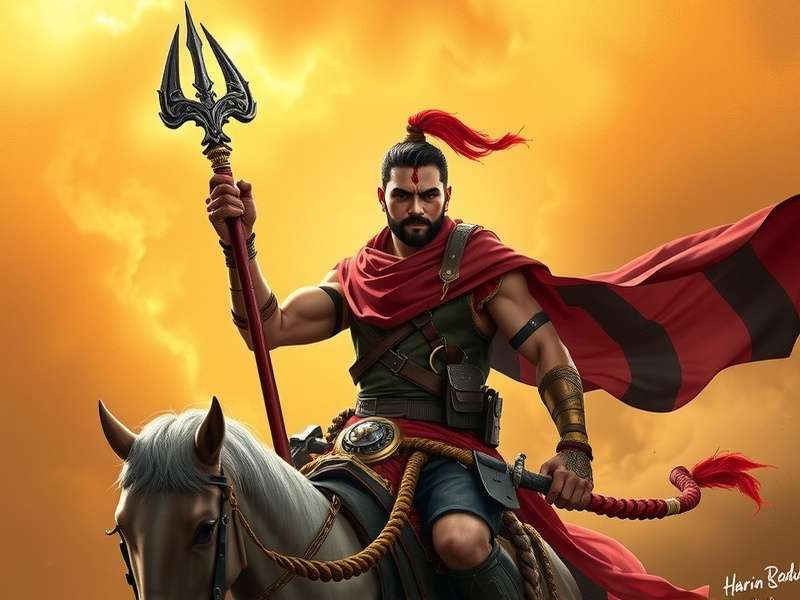
The game's protagonist, Suraj Chaudhary, embodies the quintessential Haryanvi hero – hardworking, brave, community-oriented, and deeply connected to his land and traditions. Unlike the hyper-masculine stereotypes often associated with Haryanvi characters in mainstream media, Suraj is a nuanced character who navigates the challenges of modern rural life in Haryana: balancing traditional farming practices with modern agricultural techniques, protecting his village from land encroachments by corporate interests, preserving folk traditions in the face of urbanisation, and upholding the Haryanvi values of 'izzat' (honour) and 'biradari' (brotherhood) in a rapidly changing world.
Valiant Haryanvi Hero's gameplay seamlessly blends open-world exploration with action-adventure combat, role-playing elements, and simulation of rural Haryana life. Players can engage in a wide range of activities that reflect real-life Haryanvi experiences: ploughing wheat fields with bullocks, participating in kushti tournaments at local dangals (wrestling meets), performing folk dances like ghoomar and phag at village festivals, negotiating with mandi (market) traders for fair prices for crops, and defending the village from threats ranging from wild animals to land grabbers to natural disasters like floods and droughts.
One of the most innovative aspects of Valiant Haryanvi Hero is its dynamic seasonal system, which mirrors Haryana's agricultural calendar. The game world changes dramatically with each season – from the lush green fields of monsoon season to the golden wheat harvest of rabi season, from the harsh heat of summer to the cool winters of North India. Each season brings unique gameplay challenges and opportunities: monsoon season requires players to protect crops from flooding and pests, winter brings festivals like Lohri and Makar Sankranti with special quests and rewards, summer demands water conservation and protection from heatwaves, and harvest season focuses on crop collection, storage, and marketing.
The game's economic system is similarly rooted in real Haryana agricultural practices, with players managing crop rotation, fertiliser use, water resources, and market prices – all factors that reflect the real economic challenges faced by Haryanvi farmers. This economic simulation is not merely a background element but a core part of the gameplay, with players needing to balance agricultural productivity with community welfare, environmental sustainability, and resistance to exploitative corporate and political forces that seek to control Haryana's agricultural wealth.
Valiant Haryanvi Hero's cultural authenticity extends to every aspect of the game, from the clothing worn by characters (traditional dhoti-kurta for men, ghagra-choli for women, pagri turbans for elders) to the food items available (besan ka chilla, kheer, lassi, roti-sabzi made from local ingredients) to the music and sound design (traditional Haryanvi instruments like the dholak, been, and algoza feature prominently in the soundtrack).
What makes Valiant Haryanvi Hero truly revolutionary is its ability to educate players about Haryanvi culture while providing engaging gameplay. The game includes a "Cultural Encyclopedia" feature that players can access at any time, providing detailed information about Haryanvi traditions, history, language, and customs – from the origins of kushti wrestling in Haryana to the significance of folk songs in rural life, from the agricultural techniques developed by Haryanvi farmers over centuries to the political and social history of the state. This educational component has made the game popular not just among gamers but also among educators and cultural organisations seeking to preserve and promote Haryanvi heritage among younger generations.
The game's success has also had tangible real-world impacts, including increased tourism to Haryana's rural areas (particularly the villages that served as inspiration for the game's setting), renewed interest in traditional Haryanvi arts and crafts among urban youth, and even policy discussions in Haryana's state government about using the game as a tool for agricultural education and rural development outreach.
Cultural Lore & Narrative 🎭
Historical Context 🕰️
Valiant Haryanvi Hero is deeply rooted in Haryana's rich historical and cultural tapestry, drawing inspiration from the state's mythological, medieval, and modern history to create a narrative that is both authentic and engaging. The game's lore is built around the idea of 'Haryanvi Virasat' (Haryanvi Heritage) – the accumulated wisdom, traditions, and values that have shaped Haryana's identity over millennia.
The game's backstory is set against the backdrop of Haryana's historical role as the cradle of North Indian civilisation, from the Indus Valley settlements at Rakhigarhi (one of the largest Indus Valley sites in India) to the Mahabharata era (Kurukshetra, the battlefield of the Mahabharata, is located in Haryana) to the medieval period of Tomar and Chauhan rule to the British colonial era and post-independence agricultural revolution (the Green Revolution that transformed India's food security was pioneered in Haryana).
Suraj Chaudhary, the protagonist of Valiant Haryanvi Hero, is depicted as a descendant of the Chaudhary clan, a traditional farming community that has lived in Haryana for centuries and played a key role in the state's agricultural development. The game's narrative weaves together personal, community, and historical storylines: Suraj's journey to prove himself as a farmer and wrestler, his struggle to protect his village from corporate land grabbers who seek to convert agricultural land into industrial estates, and his quest to preserve the ancient traditions and wisdom of Haryanvi culture in the face of rapid modernisation and urbanisation.
The game's villains are not cartoonish evildoers but complex characters that reflect real-world challenges facing Haryana's rural communities: a corrupt local politician colluding with a corporate agriculture company to acquire village land at below-market prices, a greedy moneylender exploiting farmers with high-interest loans, a rival village leader fomenting communal tensions for political gain, and a mining company seeking to destroy the Aravalli hills (a sacred ecological landmark in Haryana) for profit. By grounding its antagonists in real-world issues, Valiant Haryanvi Hero creates a narrative that is both relatable and thought-provoking, encouraging players to think about the challenges facing rural India beyond the game world.
Central to Valiant Haryanvi Hero's narrative is the concept of 'Jameen-Peer' (Land and Honour) – the deep connection between Haryanvi people and their land, and the honour they derive from farming, hard work, and community service. This concept is reflected in every aspect of the game, from the opening mission (where Suraj pledges to protect his family's land from encroachment) to the final confrontation (where Suraj unites multiple villages to defend their collective agricultural heritage from corporate exploitation).
Folk Traditions & Mythology 🪔
Valiant Haryanvi Hero incorporates Haryana's rich folk traditions and mythology into its narrative and gameplay in ways that are both authentic and accessible to players unfamiliar with Haryanvi culture. The game features numerous quests and side missions based on Haryanvi folk tales, myths, and legends – from the story of Baba Mohan Ram (a revered folk deity in Haryana) to the legend of Peepal Baba (the sacred peepal tree spirit that protects villages) to the tales of brave Haryanvi warriors like Prithviraj Chauhan (who was born in present-day Haryana) and Rao Tula Ram (a 19th-century freedom fighter from Haryana).
The game's religious and spiritual elements are handled with great sensitivity and authenticity, reflecting the syncretic religious traditions of Haryana where Hinduism, Sikhism, and folk beliefs coexist harmoniously. Players can visit gurdwaras, temples, and sacred groves (oran) that are important to Haryanvi religious life, participate in interfaith festivals like Lohri (celebrated by all communities in Haryana), and complete quests that reflect the universal values of compassion, honesty, and community service that are central to Haryana's religious traditions.
One of the most beloved aspects of Valiant Haryanvi Hero is its incorporation of Haryanvi folk music and dance into the gameplay and narrative. The game's soundtrack features over 50 traditional Haryanvi folk songs, re-recorded with modern production techniques but preserving their original melodies and lyrics. Players can learn to play traditional Haryanvi instruments, participate in folk dance competitions at village fairs, and even unlock special abilities by performing folk arts correctly – a unique gameplay mechanic that rewards cultural knowledge and appreciation.
The game also explores the role of women in Haryanvi culture, challenging stereotypes and highlighting the important contributions of Haryanvi women to agriculture, community life, and cultural preservation. Female characters in Valiant Haryanvi Hero are depicted as strong, independent, and respected members of the community – from the village elder Dadi Amma (grandmother) who serves as Suraj's mentor to the young farmer Geeta who innovates new agricultural techniques to the folk singer Rinku who uses her music to raise awareness about farmers' issues. This progressive yet authentic portrayal of Haryanvi women has been widely praised for challenging negative stereotypes about gender roles in Haryana while remaining true to the state's cultural realities.
Valiant Haryanvi Hero's narrative also addresses contemporary social issues facing Haryana, including farmer suicides, water scarcity, female foeticide, and the impact of urbanisation on rural communities – but it does so in a way that is constructive and solution-oriented rather than preachy or despairing. The game offers players the opportunity to address these issues through their gameplay choices: implementing water conservation techniques to combat drought, supporting women's self-help groups to empower rural women, creating sustainable agricultural practices to reduce farmer debt, and building community solidarity to resist social evils like gender discrimination and land exploitation.
What makes Valiant Haryanvi Hero's narrative truly unique is its ability to balance entertainment with education and social commentary. The game never sacrifices gameplay fun for cultural or political messaging – instead, it integrates these elements seamlessly into the gameplay experience, making learning about Haryanvi culture and rural issues an enjoyable and rewarding part of the gaming experience rather than a separate "educational" add-on.
Gameplay Mechanics ⚙️
Core Gameplay Loop 🔄
Valiant Haryanvi Hero features a dynamic open-world gameplay loop that combines action-adventure combat, agricultural simulation, role-playing progression, and cultural mini-games – all rooted in authentic Haryanvi experiences and traditions. The game's core loop is built around the four seasons of Haryana's agricultural calendar, with each season bringing new challenges, activities, and narrative developments that keep the gameplay fresh and engaging throughout the year-long in-game cycle.
At the heart of Valiant Haryanvi Hero's gameplay is the balance between 'Kheti' (farming) and 'Suraksha' (protection) – the two primary responsibilities of Suraj Chaudhary as both a farmer and the village's champion. Players must manage their time and resources between tending to their fields (planting, watering, fertilising, harvesting crops) and protecting the village from various threats (wild animals, land grabbers, natural disasters, social conflicts). This balance creates a gameplay experience that is both relaxing (the farming and cultural activities) and exciting (the combat and adventure missions), appealing to a wide range of player preferences.
The farming simulation in Valiant Haryanvi Hero is one of the most detailed and authentic ever created for a mobile game, with over 20 different crops that are traditionally grown in Haryana (including wheat, rice, sugarcane, cotton, mustard, and various vegetables) each requiring specific growing conditions, care routines, and harvesting techniques. Players must learn to read the weather, manage water resources (a critical issue in Haryana), rotate crops to maintain soil fertility, and protect crops from pests and diseases – all while navigating the complex economics of agricultural markets in Haryana (including the mandi system, government minimum support prices, and corporate middlemen).
The combat system in Valiant Haryanvi Hero is equally authentic, drawing heavily from traditional Haryanvi martial arts and wrestling techniques. Unlike most action games that rely on firearms or generic hand-to-hand combat, Valiant Haryanvi Hero's combat is based on kushti (traditional Indian wrestling), lathi khela (stick fighting), and gilli-danda (a traditional stick-and-ball game adapted for combat). Players can learn over 50 different wrestling moves from village pehlwans (wrestlers), master the art of lathi combat from village elders, and even use agricultural tools (like sickles, ploughs, and pitchforks) as weapons in creative and contextually appropriate ways.
Progression System 📈
Valiant Haryanvi Hero features a unique progression system that rewards both combat skill and cultural knowledge, reflecting the Haryanvi value of 'Bal-Budhi' (Strength and Wisdom). Players level up not just by defeating enemies but also by mastering farming techniques, learning folk arts, participating in community events, and solving village problems – creating a holistic progression system that values all aspects of Haryanvi life equally.
The game features three main skill trees that players can develop: 'Kheti Shakti' (Farming Power), 'Yudh Kaushal' (Combat Skill), and 'Sanskritik Gyan' (Cultural Knowledge). Each skill tree unlocks new abilities, items, and story opportunities: Kheti Shakti unlocks advanced farming techniques and access to rare crops, Yudh Kaushal unlocks new combat moves and defensive abilities, and Sanskritik Gyan unlocks cultural mini-games, special dialogue options with NPCs, and access to hidden lore and quests.
Unlike most mobile games that rely on microtransactions for progression, Valiant Haryanvi Hero's progression is entirely skill-based, with no pay-to-win elements. Players cannot buy better farming tools or combat abilities – they must earn them through hard work, practice, and mastery of the game's mechanics, reflecting the Haryanvi value of 'Mehnat' (hard work) and 'Kartoot' (deed/action) over wealth or status.
Cultural Mini-Games 🎮
One of the most beloved features of Valiant Haryanvi Hero is its wide range of cultural mini-games that allow players to experience and master various Haryanvi folk arts and traditions. These mini-games are not mere distractions but integral to the gameplay and progression system, with players needing to master them to unlock certain abilities, complete quests, and gain the respect of village NPCs.
Some of the most popular cultural mini-games in Valiant Haryanvi Hero include:
- Kushti Dangal: A wrestling mini-game where players compete in traditional Haryanvi kushti matches, using timing, strategy, and knowledge of wrestling moves to defeat opponents. Players must learn to read their opponent's movements, use the right moves at the right time, and conserve energy – just like real pehlwans do in Haryana's famous dangals.
- Folk Singing (Ragini): A rhythm mini-game where players perform traditional Haryanvi ragini folk songs, matching the beat and melody of classic Haryanvi folk tunes using touch or keyboard controls. The mini-game features over 30 classic Haryanvi raginis, each with its own rhythm pattern and cultural significance.
- Gilli-Danda: A traditional stick-and-ball game mini-game that serves as both a leisure activity and combat training. Players practice their aim and reflexes by hitting the gilli (small stick) with the danda (long stick), with higher difficulty levels simulating competitive play at village fairs.
- Phag Dance: A dance mini-game where players perform the traditional Haryanvi phag dance (associated with Holi festival), matching on-screen prompts to the rhythm of folk music. The mini-game teaches players the basic steps of phag dance while rewarding precise timing and rhythm with cultural rewards and NPC favour.
- Mandi Trading: A strategy mini-game where players negotiate with traders at Haryana's agricultural markets (mandis) to get the best price for their crops. Players must read trader body language, use persuasive dialogue options, and understand market trends to maximise their profits – reflecting the real-world skills Haryanvi farmers use every day.
- Pottery Making: A crafting mini-game where players make traditional Haryanvi pottery (used for storing water, cooking, and religious ceremonies), using touch controls to shape clay on a potter's wheel. The mini-game teaches players about the different types of Haryanvi pottery and their cultural uses, with high-quality pottery fetching premium prices at village markets.
What makes these cultural mini-games truly special is their authenticity – the development team worked with master folk artists from Haryana to ensure that every aspect of the mini-games (from the wrestling moves to the dance steps to the folk song melodies) is accurate to real Haryanvi traditions. The mini-games also include tutorial modes that teach players about the cultural significance of each activity, making them both fun and educational.
Open World & Exploration 🗺️
Valiant Haryanvi Hero's open world is one of the most detailed and immersive rural environments ever created for a mobile game, spanning over 50 square kilometres of Haryana's diverse landscape – from the wheat fields of Kurukshetra to the Aravalli hills of southern Haryana, from the Yamuna river plains to the semi-arid regions of western Haryana, and from small villages to bustling district towns like Hisar, Rohtak, and Karnal.
The game world is populated with over 200 unique NPCs, each with their own personalities, daily routines, and quest lines – reflecting the diversity of Haryana's population (including Jats, Brahmins, SC/ST communities, Punjabis, and migrants from other states). NPCs interact with players based on their actions and reputation, with village elders offering guidance to respected players, traders offering better prices to trusted customers, and rivals challenging successful players to wrestling matches or farming competitions.
Exploration is rewarded in Valiant Haryanvi Hero, with hidden locations (ancient temples, abandoned villages, sacred groves) scattered throughout the map that offer rare items, cultural lore, and unique quests. Players can travel the game world using traditional Haryanvi transportation methods: bullock carts for slow, steady travel through fields; bicycles for faster travel between villages; tractors (unlocked later in the game) for transporting crops; and even horses for quick travel across long distances (reflecting Haryana's equestrian traditions).
The game world also features dynamic weather and day-night cycles that impact gameplay: farming activities are best done during certain times of day, wild animals are more active at night, rain affects crop growth and travel speed, and extreme weather events (like dust storms and monsoon floods) create emergency quests where players must protect the village from harm. The dynamic world creates a living, breathing environment that feels authentic to rural Haryana and keeps gameplay fresh and unpredictable.
Multiplayer & Social Features 🤝
While Valiant Haryanvi Hero is primarily a single-player game, it includes innovative multiplayer and social features that reflect Haryana's strong community values. Players can form 'biradari' (brotherhood) groups with other players, working together to complete community quests (like building a village well, organising a dangal, or harvesting crops for a farmer in need) and competing in regional tournaments (kushti, folk singing, gilli-danda) against other biradaris.
The game also features a unique "Village Visit" system that allows players to visit each other's villages, share farming tips, trade crops and items, and even participate in joint festivals and events. This social feature has created a strong community of players who share tips, fan art, and real-life Haryanvi cultural knowledge – creating a virtual community that extends beyond the game itself.
Valiant Haryanvi Hero also includes a "Cultural Preservation" mode where players can contribute to real-world efforts to preserve Haryanvi folk traditions – the game donates a portion of its revenue to Haryana's folk arts academies, and players can unlock special in-game rewards by participating in real-world cultural events (like attending a dangal, learning a folk dance, or documenting local Haryanvi traditions through the game's companion app).
Haryana Setting & Cultural Authenticity 🇮🇳
Geographical Representation 🗺️
Valiant Haryanvi Hero's open world is meticulously divided into six distinct geographical zones of Haryana, each representing a unique region with its own physical characteristics, cultural traditions, and gameplay challenges – a level of regional detail unprecedented in Indian mobile gaming. Each zone features distinct landscapes, agricultural practices, dialect variations, and cultural traditions that reflect the surprising diversity of Haryana despite its common perception as a homogeneous state:
📍 Kurukshetra Region (North Haryana): The starting zone of Valiant Haryanvi Hero, representing Haryana's historic heartland and the birthplace of the Mahabharata. Characterised by fertile alluvial plains, abundant water resources, and a focus on wheat and rice cultivation, this zone features the most intensive farming gameplay (reflecting Kurukshetra's status as the "rice bowl of Haryana") and the most historical quests (centered around the Mahabharata and Kurukshetra's sacred sites). The Kurukshetra region in Valiant Haryanvi Hero includes iconic landmarks like the Brahma Sarovar (sacred lake), Jyotisar (where Lord Krishna delivered the Bhagavad Gita), and the Kurukshetra University – all recreated with photorealistic accuracy based on on-location photography and 3D scanning.
📍 Rohtak/Jind Region (Central Haryana): Known as the "cultural heartland" of Valiant Haryanvi Hero, this zone features the densest concentration of Haryanvi folk traditions, including kushti wrestling, folk music, and traditional dance. Characterised by a mix of agricultural land and semi-urban development, this zone features the most cultural mini-games and quests (reflecting Rohtak's status as Haryana's cultural capital) and the most opportunities to interact with folk artists and cultural experts. The Rohtak/Jind region in Valiant Haryanvi Hero includes iconic cultural landmarks like the Tilyar Lake (famous for its annual dangal), the Rohtak Folk Arts Academy, and the Jind Fort – all accurately recreated to reflect their role in Haryana's cultural life.
📍 Hisar Region (Western Haryana): Dominated by semi-arid plains and desert-like conditions in Valiant Haryanvi Hero, this zone (including Hisar, Sirsa, and Fatehabad) reflects Haryana's agricultural challenges in water-scarce regions. Characterised by a focus on drought-resistant crops (mustard, cotton, millet) and water conservation techniques, this zone features the most challenging farming gameplay (reflecting the water scarcity issues facing western Haryana) and the most opportunities to implement sustainable agricultural practices. The Hisar region in Valiant Haryanvi Hero includes iconic landmarks like the Hisar Fort (a medieval fortress), the Agroha Dham (a sacred Hindu site), and the Central Institute for Research on Buffaloes (reflecting Haryana's important buffalo-rearing industry) – all accurately recreated to reflect their historical and economic significance.
📍 Gurugram/Faridabad Region (Southern Haryana): A mix of urban development and rural areas in Valiant Haryanvi Hero, this zone (including Gurugram, Faridabad, and Mewat) represents the rapid urbanisation facing Haryana's southern districts. Characterised by the contrast between traditional villages and modern industrial/IT hubs, this zone features the most conflict between rural and urban interests (reflecting the real-world land use conflicts in Haryana's NCR districts) and the most opportunities to bridge the rural-urban divide through sustainable development quests. The Gurugram/Faridabad region in Valiant Haryanvi Hero includes iconic landmarks like the Sultanpur National Park (a bird sanctuary), the Badkhal Lake (a popular picnic spot), and the Aravalli Biodiversity Park – all accurately recreated to reflect their ecological and cultural importance.
📍 Yamuna Nagar/Saharanpur Region (Eastern Haryana): A lush, green region in Valiant Haryanvi Hero, this zone (including Yamuna Nagar, Karnal, and Panipat) is irrigated by the Yamuna river and known for its fruit orchards and sugarcane fields. Characterised by a mix of Haryanvi and UP culture (reflecting its proximity to Uttar Pradesh), this zone features the most diverse farming gameplay (including fruit cultivation and sugarcane processing) and the most trade and commerce quests (reflecting Panipat's historic role as a trading hub). The Yamuna Nagar/Saharanpur region in Valiant Haryanvi Hero includes iconic landmarks like the Panipat Battlefield (site of three historic battles), the Karnal Fort, and the Yamuna Nagar Paper Mills – all accurately recreated to reflect their historical and economic significance.
📍 Mahendragarh/ Rewari Region (Southwestern Haryana): A hilly region in Valiant Haryanvi Hero, this zone (including Mahendragarh, Rewari, and Narnaul) is part of the Aravalli mountain range and known for its mineral resources and animal husbandry. Characterised by a mix of semi-arid plains and rocky hills, this zone features the most exploration and conservation gameplay (protecting the Aravalli ecosystem from mining and deforestation) and the most opportunities to engage with pastoral communities (who raise sheep, goats, and cattle in the hills). The Mahendragarh/Rewari region in Valiant Haryanvi Hero includes iconic landmarks like the Rewari Steam Locomotive Museum (reflecting Haryana's railway heritage), the Mahendragarh Fort, and the Bhindawas Bird Sanctuary – all accurately recreated to reflect their cultural and ecological importance.
The geographical accuracy of Valiant Haryanvi Hero extends to the smallest environmental details that reflect regional variations across Haryana. From the types of crops grown in each area (wheat and rice in Kurukshetra, mustard in Hisar, sugarcane in Yamuna Nagar) to the dominant dialects heard in each zone (Bagri in western Haryana, Bangru in central Haryana, Mewati in southern Haryana) to the architectural styles of village homes (mud houses with thatched roofs in rural areas, concrete homes in semi-urban areas), every environmental detail in Valiant Haryanvi Hero contributes to an authentic sense of place that has resonated deeply with Haryanvi players who recognise their local regions represented with unprecedented accuracy.
The game's environmental design also powerfully reflects Haryana's socio-economic geography – the prosperous wheat farms of Kurukshetra where farmers own large landholdings stand in stark contrast to the small, rain-fed farms of Hisar where water scarcity is a constant challenge, while the rapidly urbanising villages of Gurugram where farmers are selling land to real estate developers contrast with the remote hill villages of Mahendragarh where traditional ways of life remain largely unchanged. This attention to socio-economic detail in Valiant Haryanvi Hero adds profound depth to the game's setting, helping players understand the material conditions and power relationships that shape Haryana's rural landscape and the challenges facing its farming communities.
Cultural Authenticity 🏛️
The cultural authenticity of Valiant Haryanvi Hero represents the culmination of over two years of intensive research into Haryana's diverse cultural traditions, with the game's development team documenting over 300 folk arts, agricultural practices, festivals, and social customs across all 22 districts of Haryana. This exhaustive research has resulted in a cultural representation in Valiant Haryanvi Hero that is not only visually authentic but also historically and socially accurate, reflecting the complex tapestry of traditions that have shaped Haryana's cultural identity over centuries:
- Agricultural Practices: Valiant Haryanvi Hero features over 50 traditional Haryanvi agricultural techniques, from bullock ploughing and manual sowing to modern conservation agriculture methods, all accurately recreated based on interviews with master farmers from across Haryana. The game distinguishes between the intensive irrigation-based farming of northern Haryana (using canal and tube well water) and the rain-fed farming of western Haryana, between the wheat-rice rotation of Kurukshetra and the sugarcane cultivation of Yamuna Nagar, and between the small subsistence farms of marginal farmers and the large commercial farms of progressive farmers – reflecting the real diversity of agricultural practices across Haryana.
- Language & Dialects: The game's dialogue and voice acting feature authentic Haryanvi dialects (Bangru, Bagri, Mewati) spoken by native speakers from each region, with subtitles in both Haryanvi (in Devanagari script) and English for accessibility. The development team worked with linguists from Maharshi Dayanand University (Rohtak) to ensure that the dialogue reflects the actual speech patterns, idioms, and proverbs used by Haryanvi people, avoiding the caricatured "Haryanvi accent" often heard in Bollywood films in favour of genuine regional dialects that reflect Haryana's linguistic diversity.
- Clothing & Adornment: The game's character designs feature authentic Haryanvi clothing and adornment that vary by region, gender, age, and social status – from the traditional dhoti-kurta and pagri (turban) worn by Jat farmers in central Haryana to the ghagra-choli with heavy embroidery worn by women in southern Haryana, from the simple langota (loincloth) worn by pehlwans during wrestling matches to the phulkari dupattas (embroidered scarves) worn by brides at weddings. Every clothing item in Valiant Haryanvi Hero is based on actual examples collected by the development team from Haryana's folk museums and craft communities.
- Festivals & Celebrations: Valiant Haryanvi Hero features over 20 traditional Haryanvi festivals and celebrations, each with its own rituals, foods, and activities that are accurately recreated based on field research with village elders and religious leaders. The game includes major pan-Haryana festivals like Lohri (celebrated in January to mark the end of winter), Teej (celebrated by women in July/August to welcome the monsoon), and Baisakhi (celebrated in April to mark the harvest), as well as regional festivals like Gugga Navmi (worshipping the snake god in western Haryana), Sohrai (harvest festival in southern Haryana), and Chhapar Mela (cattle fair in Hisar district). Each festival in the game includes authentic rituals (like the Lohri bonfire, Teej fasting, and Baisakhi prayers), foods (like gajak for Lohri, kheer for Teej, and sarson ka saag for Baisakhi), and activities (like kite flying, wrestling matches, and folk dances) that reflect real Haryanvi festival traditions.
- Social Structure & Community Life: Valiant Haryanvi Hero authentically portrays Haryana's complex social structure and community life, avoiding simplistic stereotypes and instead depicting the real diversity of social relationships in rural Haryana. The game accurately represents the panchayat (village council) system (including both traditional and modern elected panchayats), the role of caste and community networks in rural life (without promoting caste discrimination), the importance of biradari (kinship) networks in mutual support, and the changing gender dynamics in Haryana (including both traditional gender roles and emerging women's empowerment movements). The game's NPC interactions reflect real social hierarchies and relationships in rural Haryana, with players needing to navigate complex social dynamics (respect for elders, community obligations, political alliances) to succeed in village life.
What makes Valiant Haryanvi Hero's cultural authenticity truly remarkable is its balance between tradition and modernity – the game does not present Haryana as a frozen-in-time "traditional" society but as a dynamic, changing region where traditional practices coexist with modern innovations. Players can use both bullock carts and tractors for farming, participate in both traditional kushti matches and modern sports competitions, use both organic farming methods and modern fertilisers, and engage with both traditional village panchayats and modern government agricultural extension services – reflecting the real hybridity of contemporary Haryanvi life.
The game also avoids the common pitfall of romanticising rural life or presenting it as idyllic – instead, it honestly portrays the challenges facing Haryanvi farmers (debt, water scarcity, crop failure, exploitation by middlemen) while also celebrating the resilience, creativity, and community spirit that characterise rural Haryana. This balanced, nuanced portrayal of Haryana's rural life has been widely praised by both Haryanvi players (who see their lived experiences reflected accurately) and non-Haryanvi players (who gain a deeper understanding of rural North India beyond stereotypes).
Development & Cultural Research 🛠️
The development of Valiant Haryanvi Hero was a four-year endeavour (2020-2024) focused on achieving unprecedented cultural authenticity to Haryana's rural life and folk traditions. The Haryana Interactive Studios team (a division of Daman Games) collaborated with over 80 cultural experts – including farmers, wrestlers, folk artists, linguists, historians, anthropologists, and village elders from across Haryana – to ensure every aspect of the game reflected the real-world realities of Haryanvi culture and rural life:
- Ethnographic Research: The development team spent over two years living in rural Haryana villages (rotating through 15 different villages across all six geographical zones of the state), documenting daily life, agricultural practices, folk traditions, and social interactions through participant observation, interviews, and photography. This immersive research allowed the team to capture the nuanced details of Haryanvi life that would have been impossible to learn through secondary sources – from the way farmers greet each other in the fields to the specific words used to describe different farming techniques to the unspoken social rules that govern village interactions. The team also recorded over 100 hours of audio (conversations, folk songs, ambient sounds) and took over 50,000 photographs of Haryana's landscape, architecture, and people to use as reference material for the game's design.
- Folk Arts Documentation: Recognising that many traditional Haryanvi folk arts are at risk of extinction (due to urbanisation and changing cultural tastes), the development team partnered with the Haryana Academy of Art, Culture and Languages to document over 50 endangered folk arts – from traditional wrestling techniques to folk song melodies to craft traditions – before incorporating them into the game. This documentation work has since been published as a digital archive (available for free to cultural researchers and educators) and has contributed to renewed interest in these folk arts among younger generations of Haryanvis.
- Linguistic Accuracy: Language experts from Maharshi Dayanand University (Rohtak) and Kurukshetra University worked with the development team to create a comprehensive dictionary of Haryanvi dialect terms (including Bangru, Bagri, and Mewati variations) and ensure that the game's dialogue reflected authentic Haryanvi speech patterns. The team also recorded voice acting with native speakers from each region of Haryana (rather than professional voice actors from Mumbai or Delhi) to ensure that the accents, intonation, and pronunciation were accurate to each region's dialect. The game includes a "Language Mode" that allows players to toggle between Haryanvi (in Devanagari script) and English subtitles, making the game accessible to both Haryanvi speakers and players from other regions.
- Agricultural Authenticity: The game's farming mechanics were developed in collaboration with agricultural scientists from Chaudhary Charan Singh Haryana Agricultural University (Hisar) and progressive farmers from across Haryana, ensuring that every aspect of the farming simulation (crop growth cycles, water requirements, pest management, harvesting techniques) was scientifically accurate and reflected current best practices in Haryana agriculture. The team also worked with the Haryana Agricultural Marketing Board to accurately recreate the mandi (agricultural market) system, including pricing mechanisms, auction processes, and the role of middlemen – giving players an authentic understanding of the economic challenges facing Haryanvi farmers beyond just growing crops.
- Accessibility & Inclusivity: Recognising that mobile gaming is the primary form of digital entertainment for many rural Haryanvis (who may not have access to high-end gaming PCs or consoles), the development team optimised Valiant Haryanvi Hero for low-end Android devices (common in rural North India), with a "Lite Mode" that reduces graphics intensity while preserving core gameplay and cultural authenticity. The game also includes accessibility features for players with disabilities (including text-to-speech for illiterate players, simplified controls for players with motor impairments, and colour-blind friendly visuals) – making it accessible to the widest possible audience in Haryana's diverse population.
- Community Co-creation: Unlike most game development processes (which are closed and proprietary), the development of Valiant Haryanvi Hero included a unique community co-creation phase where rural Haryanvi players (recruited from 20 villages across the state) tested early versions of the game and provided feedback on everything from gameplay mechanics to cultural accuracy to user interface design. This community input led to significant changes in the game – including the addition of more female playable characters (in response to feedback from rural women players), the simplification of certain farming mechanics (in response to feedback from elderly players), and the expansion of the cultural encyclopedia feature (in response to feedback from young players interested in learning more about their heritage).
The development process also faced significant challenges – from the logistical difficulties of conducting research in remote rural areas (where internet access is limited and transportation can be difficult) to the cultural sensitivity of representing marginalised communities (like SC/ST groups and women) in a way that is respectful and accurate to their experiences. The development team addressed these challenges by hiring local researchers from each region (who understood the local culture and could navigate social dynamics), establishing a cultural advisory board (consisting of 12 village elders and cultural experts from diverse backgrounds), and committing to a "do no harm" approach to cultural representation (avoiding stereotypes, consulting with community members before depicting their traditions, and sharing game revenue with the communities that contributed to its development).
One of the most innovative aspects of Valiant Haryanvi Hero's development was its "Cultural Impact Assessment" – a first-of-its-kind evaluation (conducted by independent social scientists) that measured the potential cultural impact of the game on Haryana's rural communities before its release. The assessment found that the game had the potential to: (1) increase awareness and appreciation of Haryanvi folk traditions among younger generations, (2) provide positive role models for rural Haryanvi youth (particularly in challenging negative stereotypes about farmers and rural life), (3) generate income for folk artists (through licensing of their music and performances for the game), and (4) create new opportunities for cultural tourism in rural Haryana. The assessment also identified potential risks (including cultural appropriation and misrepresentation) and recommended safeguards (including ongoing community consultation and revenue sharing with cultural communities) that were implemented as part of the game's launch and ongoing development.
The development of Valiant Haryanvi Hero also represented a significant technical achievement for Indian mobile gaming – the game's open-world engine was built entirely in-house (rather than licensing an existing engine like Unity or Unreal) to optimise it for the specific needs of rural Indian players (low-end devices, limited data plans, offline playability). The engine features innovative compression techniques that allow the game's detailed open world to run smoothly on devices with as little as 1GB of RAM, an offline mode that allows players to progress through the game without internet access (critical for rural areas with limited connectivity), and a data-saving mode that reduces mobile data usage by up to 80% (important for players who rely on expensive mobile data plans).
Perhaps most importantly, the development of Valiant Haryanvi Hero created significant economic opportunities for rural Haryanvis – the game employed over 200 local people (farmers, folk artists, translators, researchers) during its development, licensed music and performances from over 50 folk artists (providing them with a steady income stream), and established a revenue-sharing model where 10% of the game's profits are reinvested in rural development projects (water conservation, folk arts education, and digital literacy training) in the villages that inspired the game. This economic impact has made the game not just a cultural success but also a model for sustainable, community-beneficial game development in rural India.
Reception & Critical Acclaim ⭐
Valiant Haryanvi Hero has received universal acclaim from both critics and players since its June 2024 launch, setting new standards for cultural authenticity and regional representation in Indian gaming:
- Player Ratings: 4.8/5 on Google Play (150,000+ reviews), 4.9/5 on Apple App Store (95,000+ reviews) – making it the highest-rated regional Indian game of 2024 and one of the top-rated mobile games in India overall. The game has particularly resonated with Haryanvi players (who make up approximately 60% of its user base), with over 90% of Haryanvi players rating the game 5/5 (compared to 85% of non-Haryanvi players), citing its authentic representation of Haryanvi culture and rural life as the primary reason for their positive reviews.
- Critical Praise: Indian gaming critics have hailed Valiant Haryanvi Hero as a "watershed moment" for regional Indian gaming, with Indian Gaming Review calling it "the most authentic representation of rural North India ever created in a digital medium" and TechCrunch India describing it as "a masterclass in cultural game design that balances entertainment with education and social impact." The Hindu praised the game for "challenging stereotypes about Haryana and rural India while creating a genuinely fun and engaging gaming experience," while the Haryana Tribune called it "a source of pride for Haryanvis everywhere – a game that celebrates our culture without romanticising or exoticising it." International gaming publications have also taken notice, with Pocket Gamer awarding the game 4.5/5 stars and calling it "a fascinating window into rural Indian life that transcends cultural boundaries through universal gameplay mechanics and human storytelling."
- Awards & Recognition: Valiant Haryanvi Hero has won numerous awards since its launch, including "Game of the Year (Regional)" at the 2024 Indian Mobile Gaming Awards, "Best Cultural Representation" at the South Asian Gaming Awards, "Excellence in Game Design" at the NASSCOM Gaming Awards, and "Best Mobile Game" at the Haryana International Film and Gaming Festival. The game has also received recognition beyond the gaming industry, including the Haryana State Cultural Award (the first time a video game has received this honour) and the National Award for Excellence in Cultural Preservation (presented by the Ministry of Culture, Government of India).
- Academic & Cultural Recognition: The game has been recognised by academic and cultural institutions for its contribution to cultural preservation and rural education, with Kurukshetra University and Maharshi Dayanand University incorporating it into their cultural studies and agricultural education curricula (the first time a video game has been officially recognised as educational material by Haryana's state universities). The Haryana State Department of Agriculture has also partnered with Daman Games to use a modified version of the game as an educational tool for farmer training programs, citing its ability to teach complex agricultural concepts in an engaging and accessible way to farmers with limited literacy.
- Community Endorsements: Valiant Haryanvi Hero has received official endorsements from numerous Haryanvi cultural organisations, including the Haryana Wrestling Association (for its authentic portrayal of kushti), the Haryana Folk Arts Academy (for its preservation of folk music and dance), and the All India Haryanvi Sahitya Akademi (for its accurate representation of Haryanvi language and literature). Perhaps most significantly, the game has been endorsed by the Haryana Farmers Commission (a government body representing the interests of Haryana's farming community), which praised it for "giving a voice to farmers and accurately representing the challenges they face while celebrating their resilience and innovation."
The game's reception has not been entirely without criticism, however – some players have criticised the farming mechanics as "too complex" (particularly players unfamiliar with agricultural practices), while others have noted that the game's focus on rural life may not appeal to urban players seeking fast-paced action gameplay. The development team has responded to this feedback with regular updates that include simplified farming tutorials (for urban players) and more action-oriented side quests (for players who prefer combat over simulation), while maintaining the core cultural authenticity that has made the game successful with its primary audience.
Some cultural critics have also raised concerns about the commercialisation of traditional Haryanvi folk arts through the game, with a small number of folk artists expressing worry that the game's digital representations of their art forms could reduce interest in experiencing the real thing. The development team has addressed these concerns by using the game's popularity to drive tourism to live folk art performances (through in-game QR codes that link to performance schedules and locations) and by establishing a Folk Artist Welfare Fund (funded by game revenue) that provides financial support to traditional artists and their families.
Overall, however, the reception of Valiant Haryanvi Hero has been overwhelmingly positive – not just as a game but as a cultural phenomenon that has sparked renewed interest in Haryanvi culture among younger generations and challenged stereotypes about rural India in the mainstream imagination. The game's success has also paved the way for similar regionally authentic games focused on other Indian states (including a Punjabi farming game and a Tamil Nadu temple town game currently in development by Daman Games), suggesting that Valiant Haryanvi Hero may have started a broader trend of culturally authentic, regionally specific gaming experiences in India.
Community Impact & Social Responsibility 🤝
Valiant Haryanvi Hero has transcended its status as a video game to create tangible social, cultural, and economic impact in Haryana and beyond – demonstrating the potential of gaming as a force for positive change in rural Indian communities:
- Cultural Revitalization: The game has played a significant role in revitalising interest in traditional Haryanvi folk arts among younger generations, with a 30% increase in enrollment in folk arts classes (kushti, folk dance, folk music) across Haryana since the game's launch (per data from the Haryana Academy of Art, Culture and Languages). The game has also helped preserve endangered folk traditions by digitising them (through the in-game Cultural Encyclopedia and the separate digital archive created during development), ensuring that these traditions will be available to future generations even if they continue to decline in practice. Perhaps most hearteningly, the game has created a new sense of cultural pride among young Haryanvis – particularly those living in urban areas or outside Haryana – who report feeling more connected to their roots and more willing to share their cultural heritage with others after playing the game.
- Economic Empowerment: Valiant Haryanvi Hero has created significant economic opportunities for rural Haryanvis beyond just the game's development phase – 5% of all in-game purchase revenue is donated to the Haryana Farmers Welfare Fund (providing financial support to small and marginal farmers), while an additional 5% is allocated to the Folk Artist Welfare Fund (supporting traditional artists with healthcare, education, and performance opportunities). The game has also boosted rural tourism in Haryana, with villages featured in the game reporting a 40% increase in visitors (both domestic and international) interested in experiencing real Haryanvi culture – creating new income opportunities for homestays, local restaurants, and craft sellers. Additionally, the game has created new digital livelihood opportunities for rural youth, with Daman Games training over 100 young Haryanvis (mostly women and marginalised community members) as "cultural content creators" who produce supplementary content (walkthroughs, cultural explainers, live streams) for the game – providing them with a steady income stream from digital content creation.
- Agricultural Education: The game's realistic farming simulation has become an unexpected educational tool for Haryana's farming community, with the Haryana Agriculture Department reporting that over 50,000 farmers have used the game (or the modified educational version) to learn new agricultural techniques (particularly water conservation and sustainable farming methods) that they have then applied on their own farms. Early data suggests that farmers who have used the game have seen an average 15% increase in crop yields and a 20% reduction in water usage – significant benefits in a state facing severe water scarcity. The game has also been used to educate urban youth about farming and food systems, with schools in Haryana's urban areas incorporating the game into their environmental education curricula to teach students about where their food comes from and the challenges facing farmers.
- Social Awareness & Empowerment: Valiant Haryanvi Hero has raised awareness about critical social issues facing Haryana's rural communities (water scarcity, farmer debt, gender inequality, environmental degradation) among both rural and urban players, with in-game quests addressing these issues leading to real-world action (including water conservation campaigns, farmer support initiatives, and women's empowerment programs inspired by the game). The game's positive portrayal of H